

Overview of German 1872-1949 stamps
It is helpful to begin with a broad overview of German stamps and the highlighted time of issues. More specific areas are covered in other sections, so some overlap is inevitable.

German Empire stamps span 1872 to 1945 and are identified by four main design eras.
- The 1872 Eagle breast shields.
- The 1875-1900 numeral and Reichsadler issues.
- The 1900-1922 Germania definitives with an inscription change from "REICHSPOST" to "DEUTSCHES REICH" after 1902.
The first stamps of the unified German Empire feature an eagle on a heraldic breast shield.
Numeral and Eagle Issues (1875-1900) "Pfennige" and "Pfennig" issues are distinguished by their inscription: early stamps "PFENNIGE" (with a final E), while later issues use "PFENNIG."
The Reichsadler (Imperial Eagle) stamps continued with gradually refined designs.
Germania Definitives (1900-1922) are dated by watermark and inscription: the earliest 1900 stamps are unwatermarked and read "REICHSPOST"
Stamps from 1902 read "DEUTSCHES REICH".
See my thread
Discuss and share in detail, the 'Germania' Stamp Issues 1900-1922
here. https://www.stampboards.com/viewtopic.php?t=74927&hilit=watermarks
Beginning in 1905, Germania stamps featured a diamond, or lozenge, watermark. The design depicts an allegorical female warrior and remains one of the most recognizable German stamp types.
Most Germania stamps were printed either on unwatermarked paper or paper bearing the lozenge watermark. Early issues were printed on unwatermarked paper, while stamps issued from 1905 to 1919 used paper with a lozenge-patterned watermark. Near the end of the Germania series, three stamps issued between 1921 and 1922 were printed on paper with a network-patterned watermark. Two stamps from the 1920–1922 issue were printed on paper with a quatrefoil watermark, which was originally intended for revenue stamps.
After 1902, the inscription changed from "REICHSPOST" to "DEUTSCHES REICH"
In addition to the variations in design and watermarked papers, the Germania issues also feature bi-color printings and issues that are printed on colored paper.
War Printings
During World War I, paper quality and perforation standards declined noticeably. War-era stamps printed on inferior paper can often be identified by their rough texture.
Germania designs were used in the following areas.
Bavaira
Danzig
Allenstein
Marienwerder
Memel
Saar
Upper Silesia
German Post Offices Abroad
China
Marocco
Turkey
Occupation Issues
Belgium
France (Western Command)
Latvia
Lithuania (Eastern Command)
Poland
Romania
German Inflation Stamps (1921–1923)
See my thread on these:
Discuss and share the 1920s German 'Inflation era' stamps and covers
https://www.stampboards.com/viewtopic.php?t=60435&hilit=inflation+1923
These are distinguished by their rapidly escalating denominations, which climbed from single marks to billions of marks in just two years. Surcharges and overprints were widely used to revalue existing stamp stocks, reflecting the extraordinary pace of Germany’s hyperinflation. These issues remain among the most remarkable stamps in philatelic history.
Overprints and Surcharges
As inflation outpaced printing capacity, existing stamps were overprinted with new denominations. Genuine overprints were applied by official printers, so confirmation is needed with reference to the typeface, ink colour, and alignment to correspond with known authentic examples. This inflationary period includes more than 150 Michel catalog numbers.
Local Overprints
Some post offices created their own provisional overprints. While many are rare, even more forgeries were produced to exploit collectors.
Paper Varieties
As paper supplies became scarce, stamps were printed on a variety of paper stocks. Differences in watermarks, paper thickness, and other characteristics resulted in significant catalog varieties.
Forgery Warning
Inflation-era overprints are among the most frequently forged German stamps. The most valuable items are specific overprint varieties, including inverted, doubled, and shifted overprints. A genuine Michel 309Ba (2-million on 200-mark with an inverted overprint) is worth thousands, yet most examples offered for sale are fabricated.
Following the currency reform of late 1923, Germany entered a period of relative economic stability. Stamps of the Weimar Republic's stable period (1924–1933), cataloged roughly as Mi 338–478, include several important series.
Reichspräsident Definitives
Portrait stamps of President Friedrich Ebert, issued from 1928, and later Paul von Hindenburg, issued from 1932, served as the standard definitive issues.
The Hindenburg definitives span both the Weimar Republic and Third Reich periods.
Nothilfe (Emergency Relief) Semi-Postals
Issued annually to support social welfare programs, these charity stamps feature coats of arms, notable buildings, and cultural themes. They are particularly popular with thematic collectors.
Zeppelin Stamps
Among the most valuable and sought-after German stamps, Zeppelin issues were used to frank mail carried on Graf Zeppelin and Hindenburg flights. These airmail stamps command premium prices, especially on flown covers. The 1928–1931 issues are particularly important additions to any serious German collection.
Third Reich Period (1933-1945)
Third Reich stamps (1933-1945) are identified by their definitive series and propaganda commemoratives, anchored by the Hindenburg Medallion (Mi 512-528) and the Hitler Head definitives (Mi 781-802).
Major definitive series include the Hindenburg Medallion issued 1933-1936. These portrait stamps of President Hindenburg come in two watermark varieties: the upright waffle pattern and the horizontal mesh pattern. The watermark type significantly affects value.
Hitler Head definitives were issued from 1941 as the standard definitive series. High values exist in both perf 14 and perf 12½ varieties.
Commemoratives: The regime issued many propaganda-themed commemoratives for events, party congresses, and annexations. Stamps for the 1936 Berlin Olympics and the "Anschluss" with Austria are among the most collected.
Occupation stamps: As Germany occupied territories during WWII, overprinted stamps were issued for Bohemia-Moravia, the General Government (Poland), Ostland (Baltic states), and Ukraine.
Post-WWII Occupation Zones (1945-1949).
After Germany's defeat, the four Allied occupation zones each issued separate stamps before the creation of the two German states.
American Zone1945-1946
Mi 1-15 (AM Post) printed in Washington, DC; distinctive US-quality paper.
British Zone1945-1946 Mi 16-35 (AM Post)British-printed versions of same designs; different paper and perforations.
American/British Bizone1946-1949 Mi 36-68 (AM Post)
French Zone1945-1949
Regional issues for Baden, Rhineland-Palatinate, and Wurttemberg with local designs
Soviet Zone (SBZ)1945-1949
Special catalogs: Michel publishes separate volumes for German States, German Colonies, occupied territories, and local issues. The "Deutschland-Spezial" two-volume catalog is the most detailed reference for serious collectors.
Online catalog: The Michel online database allows searching by catalog number, year, or theme and includes current market values in euros.
Identifying German Stamp Watermarks
Watermarks are critical for correctly identifying and cataloging German stamps.
The most important watermarks are .
- Lozenge/Diamond pattern (Rauten): Used on Germania and early Weimar Republic issues.
- Waffle pattern (Waffelmuster): Found on 1933-1934 Hindenburg definitives. Appears as a grid of small squares.
- Swastikas (Hakenkreuze): Used briefly in 1934 on certain Hindenburg issues.
Plate Flaws and Varieties.
German stamp collecting has a strong tradition of plate-flaw study as is demonstrated in other sections .
Airmail issues.
German airmail history between 1875 and 1949 spans pioneering semi-official flights, the introduction of official state airmail during the Weimar Republic, and turbulent issues through WWII and Allied occupation.
- Rhine-Main (1912): Germany's first semi-official airmail labels were issued for the Rheinschiff-Flugexperimental airmail flights using airships like the Schwaben and biplanes like the Gelber Hund.
- Bork-Brück & Regensburg (1912): Rare vignettes (such as the lilac Bork-Brück label) were issued by private aviation groups to cover specific flight fees rather than standard postage.
- First Official German Air Post (1912): Darmstadt to Frankfurt experimental flights used overprinted private stamps denoted by special cachets.
- Zeppelin Issues: Special high-value airmail stamps were released to pay for famous Graf Zeppelin and Hindenburg polar and South American flights.
- Propaganda & Commemoratives (1933–1945): Airmail stamps featured prominent national symbols, party congresses, and specific Zeppelin route overprints.
- Post-War Local & Allied Zones (1945–1949): Following the collapse of the Nazi regime, regular mail stalled. Emergency local overprints on Hitler stamps preceded joint Allied zone issues (AM Post) before West German (Bundespost) and East German (GDR) entities split production in 1949.
Not forgetting the many Official stamps in the period 1903-1
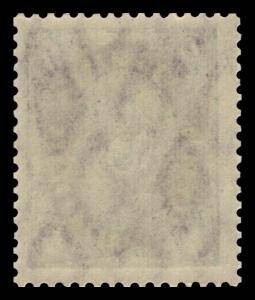
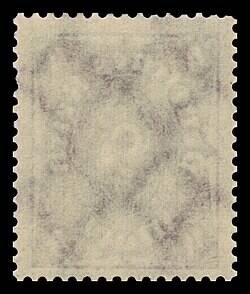
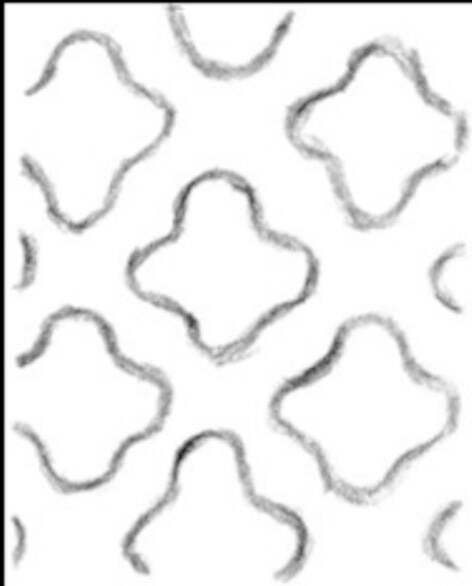
From top- Lozenge, network & quatrefoils watermarks found on Germania issues.
Services
We offer a range of specialized services tailored to meet your individual needs. Our approach is focused on understanding and responding to what you require, providing effective and practical solutions.

Basic
We offer a range of specialized services tailored to meet your individual needs.

Professional
We offer a range of specialized services tailored to meet your individual needs.

Business
We offer a range of specialized services tailored to meet your individual needs.
Beyond the ordinary
This is where our journey begins. Get to know our business and what we do, and how we're committed to quality and great service. Join us as we grow and succeed together. We're glad you're here to be a part of our story.

Professional services
We offer a range of specialized services tailored to meet your individual needs. Our approach is focused on understanding and responding to what you require, providing effective and practical solutions.
What we do
We offer a range of specialized services tailored to meet your individual needs. Our approach is focused on understanding and responding to what you require, providing effective and practical solutions.
